Music Theory
Understanding the structures and systems of music
Projects
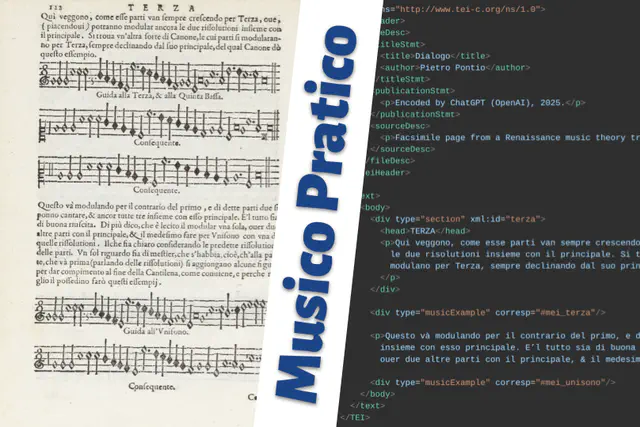
Musico Pratico
Pietro Pontio's dialogues in translation, digital evaluation and critical reception
View project →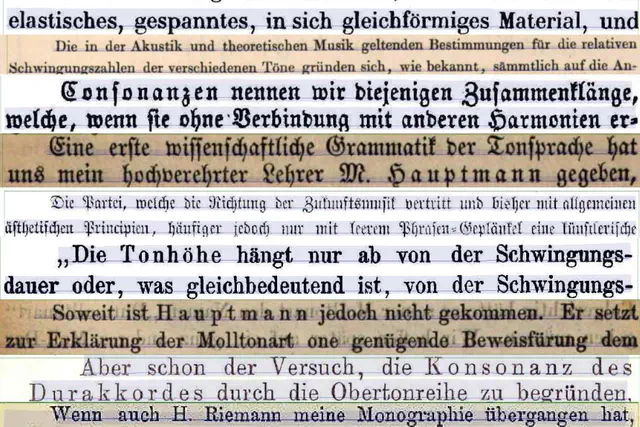
DigiMusTh
Aufbau einer offenen digitalen Sammlung historischer musiktheoretischer Texte aus dem deutschsprachigen Raum anhand von Beispielen aus dem 19. Jahrhundert
View project →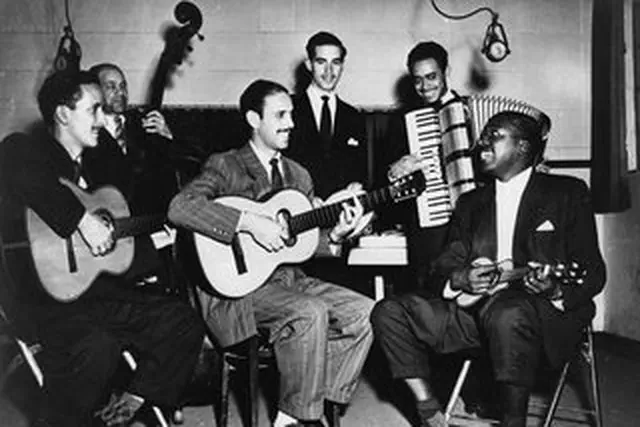
Digital Choro
Exploring the potential of digitization and computational models for Brazil's musical cultural heritage
View project →
Representing Harmony
Goals and Challenges
View project →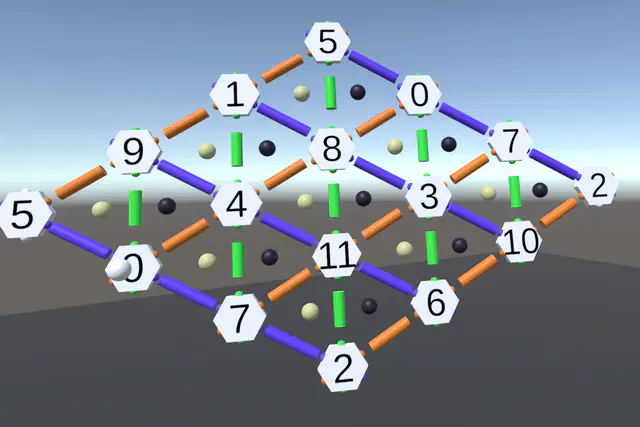
Virtual Tonal Spaces (VTS)
Towards an interactive digital environment for music theory
View project →
Digitizing the Dualism Debate
a case study in the computational analysis of historical music theory sources
View project →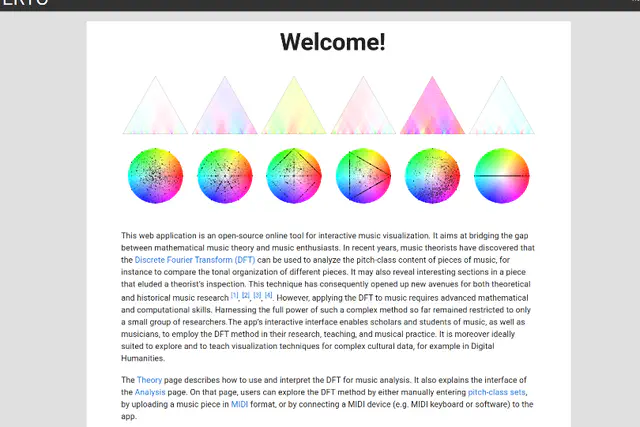
midiVERTO
Enabling interactive music visualization for a wider community
View project →Publications
Harmonic patterns in Brazilian choro, Western classical, and Anglophone popular music: a data-driven comparison
Encoding polymeter: A corpus of Hugo Distler's «Der Jahrkreis» op. 5 in different symbolic formats
We present DistlerCorpus, a corpus of Hugo Distler’s Der Jahrkreis op. 5.
Mapping the space of harmonic cadences between Brazilian choro, jazz and Anglophone popular music
This paper reports on an experiment extends a methodology to analyze and compare harmonic progressions at moments of formal segmentation in different styles based on corpora of Roman numeral annotations, and deploys it to the styles of Brazilian choro, Anglophone popular and jazz music.
Tong yun san gong theory: corpus evidence for the distinctions among three Chinese heptatonic diao
Establishment of an open digital collection of historical music theory texts from German-speaking countries based on 19th-century examples (DigiMusTh) – Project Documentation and Guidelines
Modeling the Evolution of Harmony in Popular Music from Different Cultural Contexts
Here, we introduce music-theoretically sensible notions of harmonic distance between chords, that allows us to arrive at more fine-grained results regarding relative influences of different kinds of harmonic relations on diachronic changes.
Fourier Qualia Wavescapes: Hierarchical Analyses of Set Class Quality and Ambiguity
We introduce a novel perspective on set-class analysis combining the DFT magnitudes with the music visualisation technique of wavescapes.
Transatlantic Transformations: On Neo-Riemannian Theories
Hugo Riemann never set foot on American soil. His harmonic theories, however, did cross the Atlantic and fell on fertile grounds, inspiring a rich repertoire of methods for music analysis that is nowadays usually subsumed under the name of neo-Riemannian theories (NRTs)—decidedly in the plural form. In this essay, I will review the central characteristics of NRTs and will relate how they connect with Hugo Riemann’s original works.
Challenging sources: a new dataset for OMR of diverse 19th-century music theory examples
This paper introduces the 19MT-OMR corpus that can be used to test OMR models on a diverse set of sources. We illustrate this challenge by discussing several examples from this data set.
19MT-OMR: A dataset for multimodal Optical Music Recognition
midiVERTO: A Web Application to Visualize Tonality in Real Time
Towards a Unified Model of Chords in Western Harmony
The line of fifths and the co-evolution of tonal pitch-classes
In this study, we determine the fundamental role of the line of fifths for the organization of tonal material by applying dimensionality reduction to a large historical corpus of pitch-class counts (ca. 1360–1940). We observe a historically growing trend in the exploitation of the fifths range, i.e. the size of segments that pitch-class distributions cover on the line of fifths. Moreover, we introduce the novel concept of pitch-class (co-)evolution.
Wavescapes: A visual hierarchical analysis of tonality using the discrete Fourier transform
We introduce wavescapes, a novel visualization method for tonal hierarchies that combines the visual representation of keyscapes with music analysis based on the discrete Fourier transformation (DFT) and illustrate it by analyzing compositions by Josquin, Bach, Liszt, Chopin, Scriabin, Webern, Coltrane, and Ligeti.